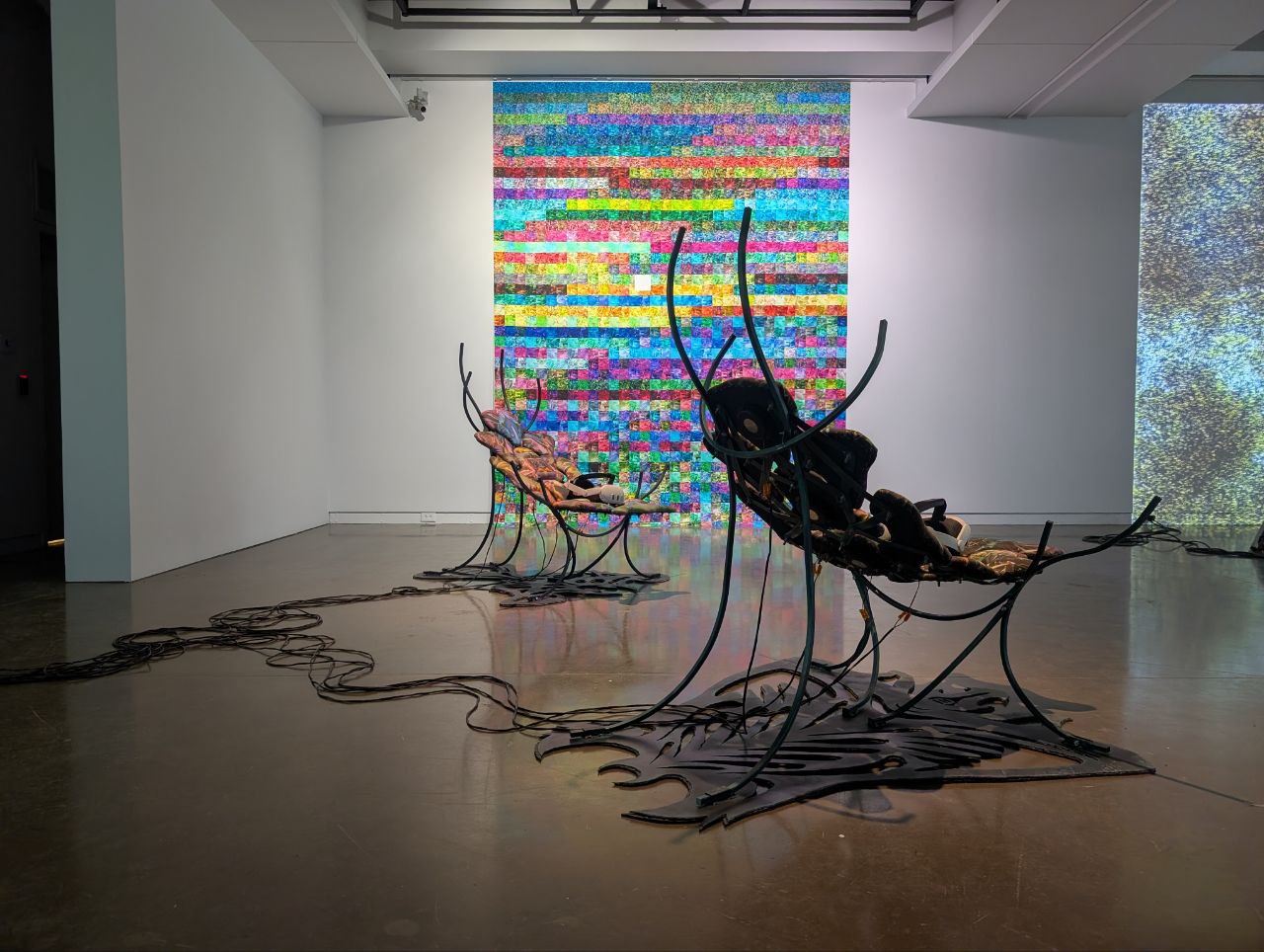
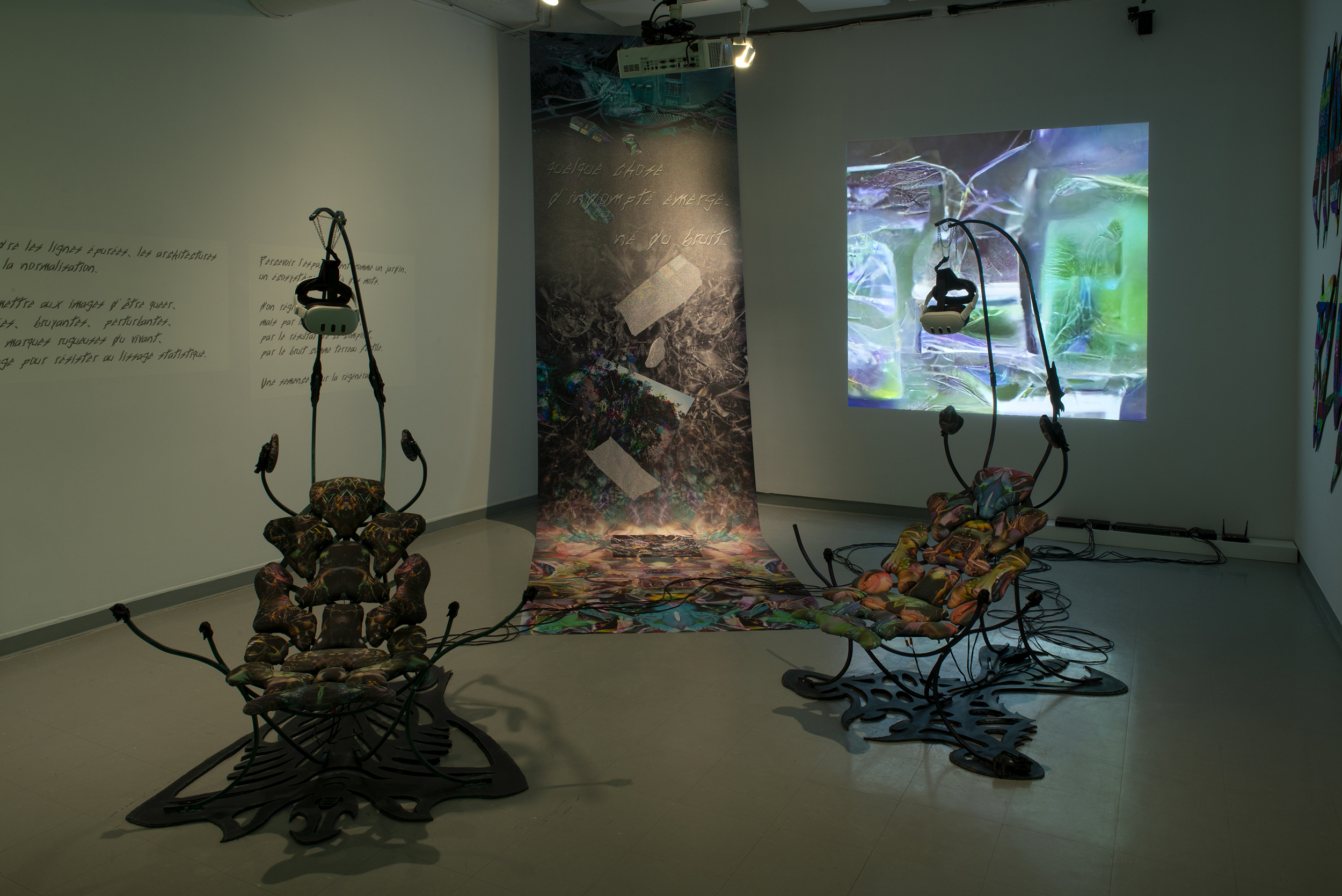
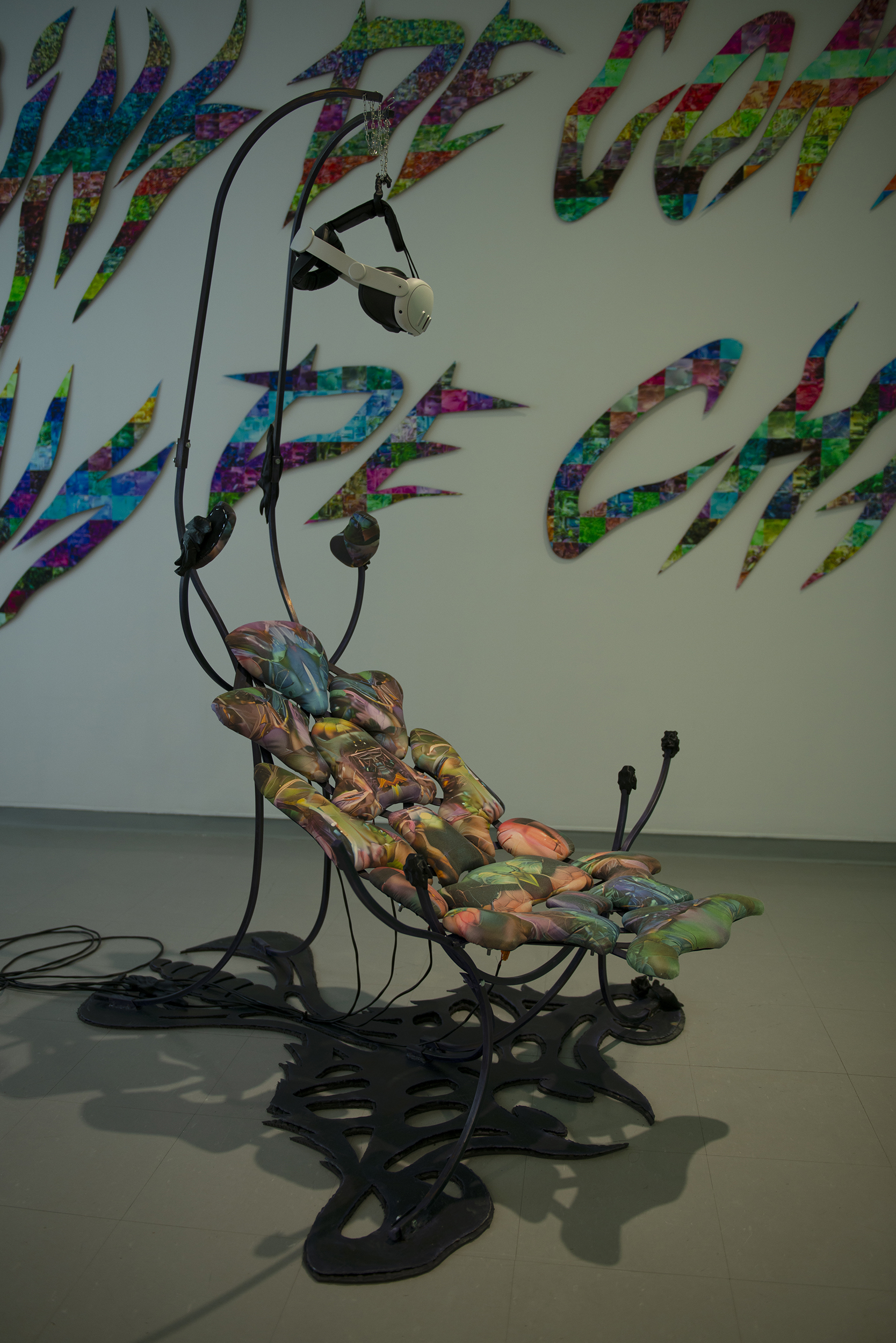
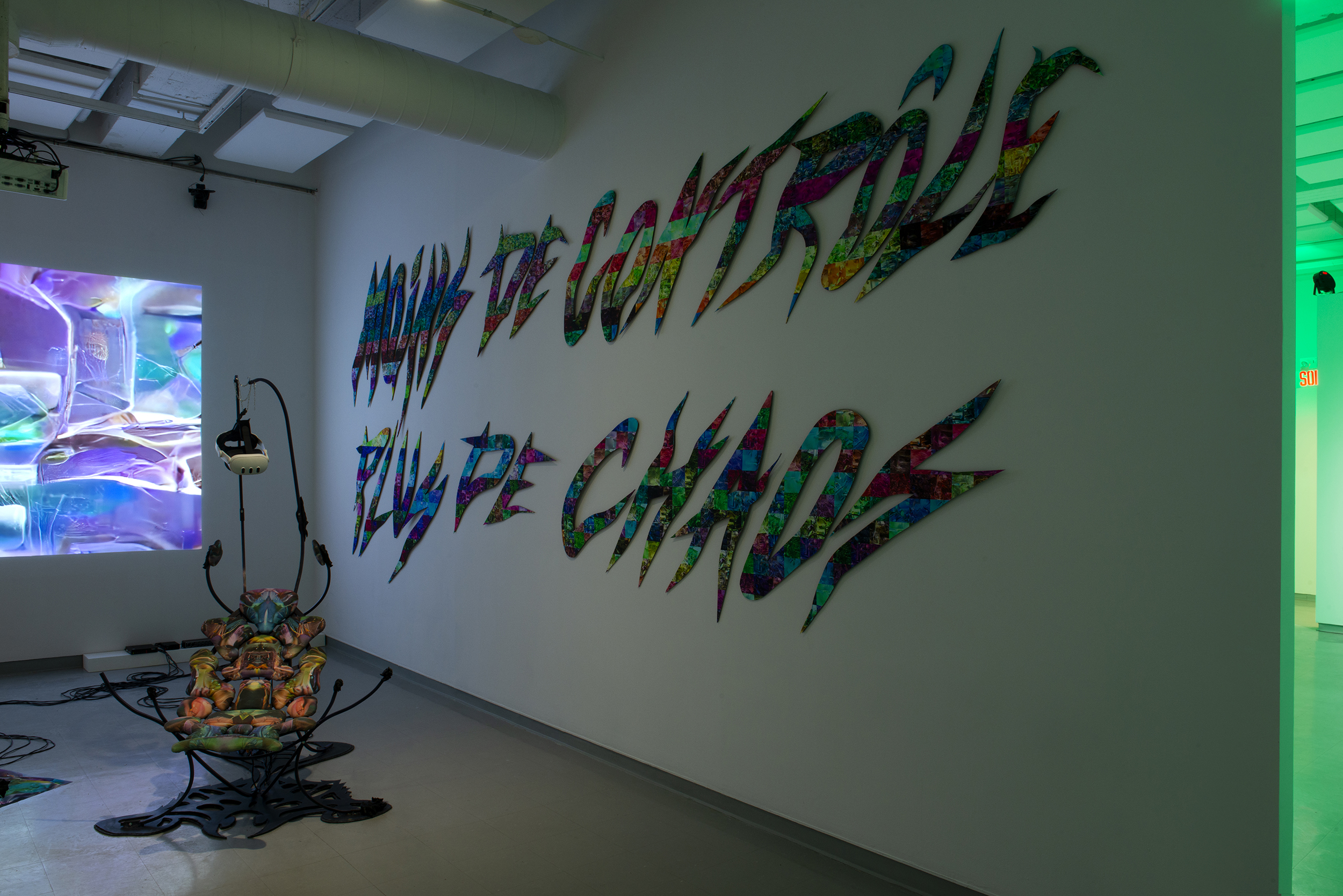
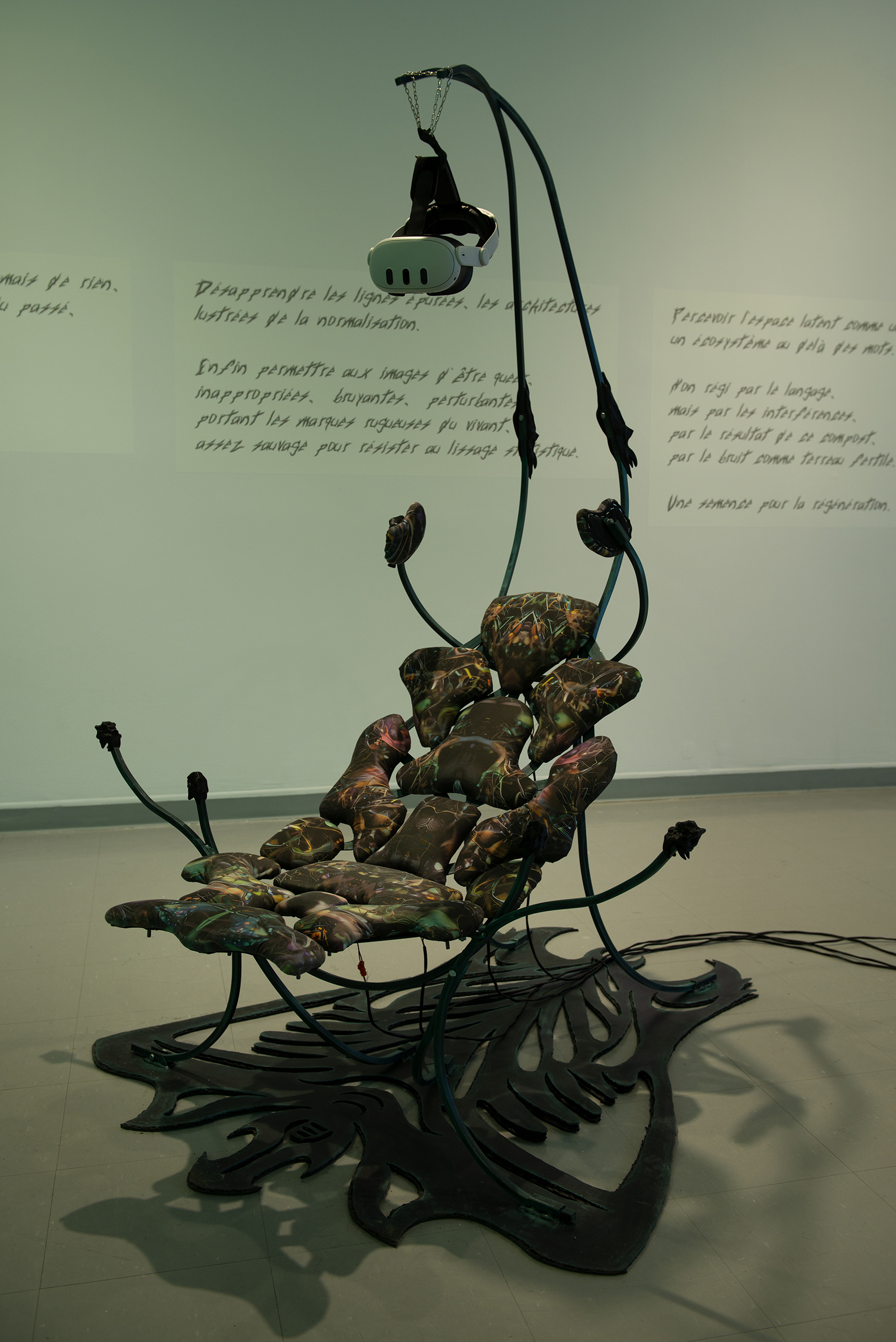
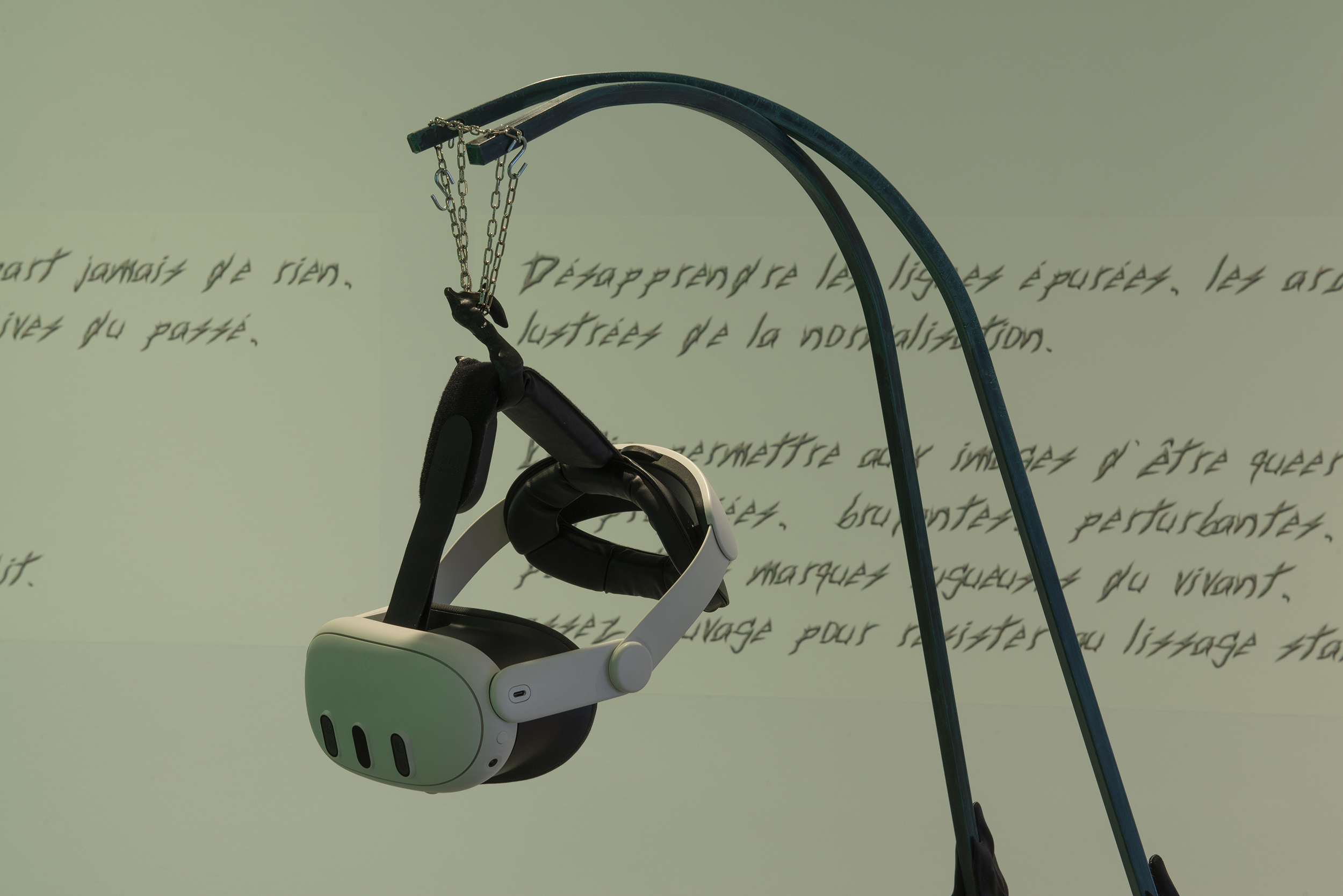
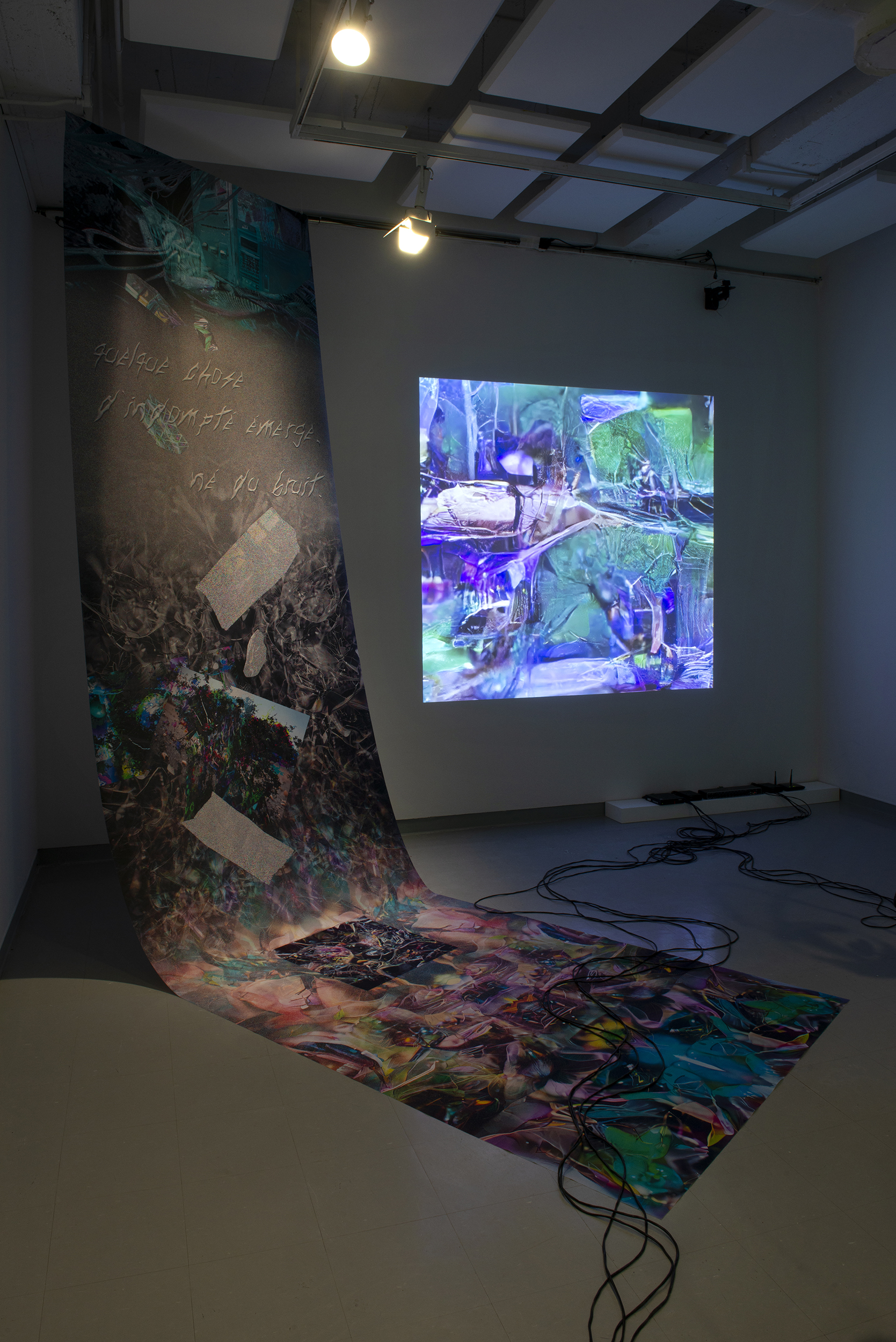
immersive VR installation, digital prints on fabric, wood, foam, steel, cables, transducers, computer, router, VR headsets, projection, soundworld by Leon Louder, variable dimensions, 2025
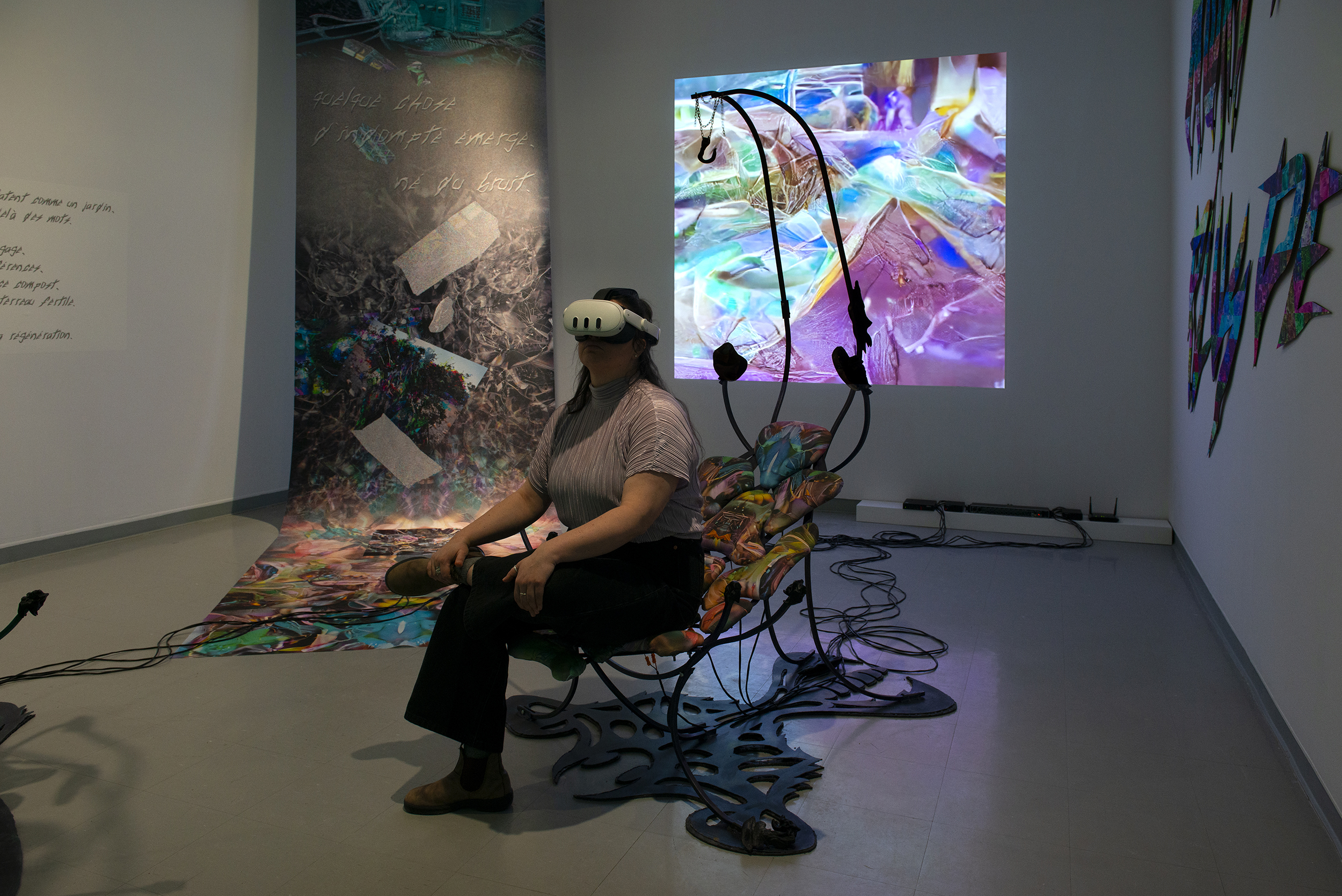
Techno-Compost offers a reflection on data accumulation, particularly by taking a critical look at the energy footprint of the use and training of generative AI models and data storage. In nature, accumulation is dealt with through decomposition and, through death, produces fertile matter from which new life can emerge. Here, Techno-Compost proposes a virtual reality experience that explores decomposition as a potential solution to the accumulation of digital data, which has been particularly accelerated since the emergence of machine learning tools. The universe presented is organic and subterranean, orchestrating the gradual dissolution of digital matter that comes mainly from unselected images, but which were nonetheless generated with AI during a previous project. This degradation is carried out by algorithmic decomposing agents, inspired by decaying bacteria, fungi, and insects, in a fictional compost that will then produce fertile soil once again, in a cyclical process of entropy and regeneration. The experience is slow and contemplative, involving haptic sensations of vibrations linked to sound, to bring the user's body to experience digital decomposition in a physical and immersive way.
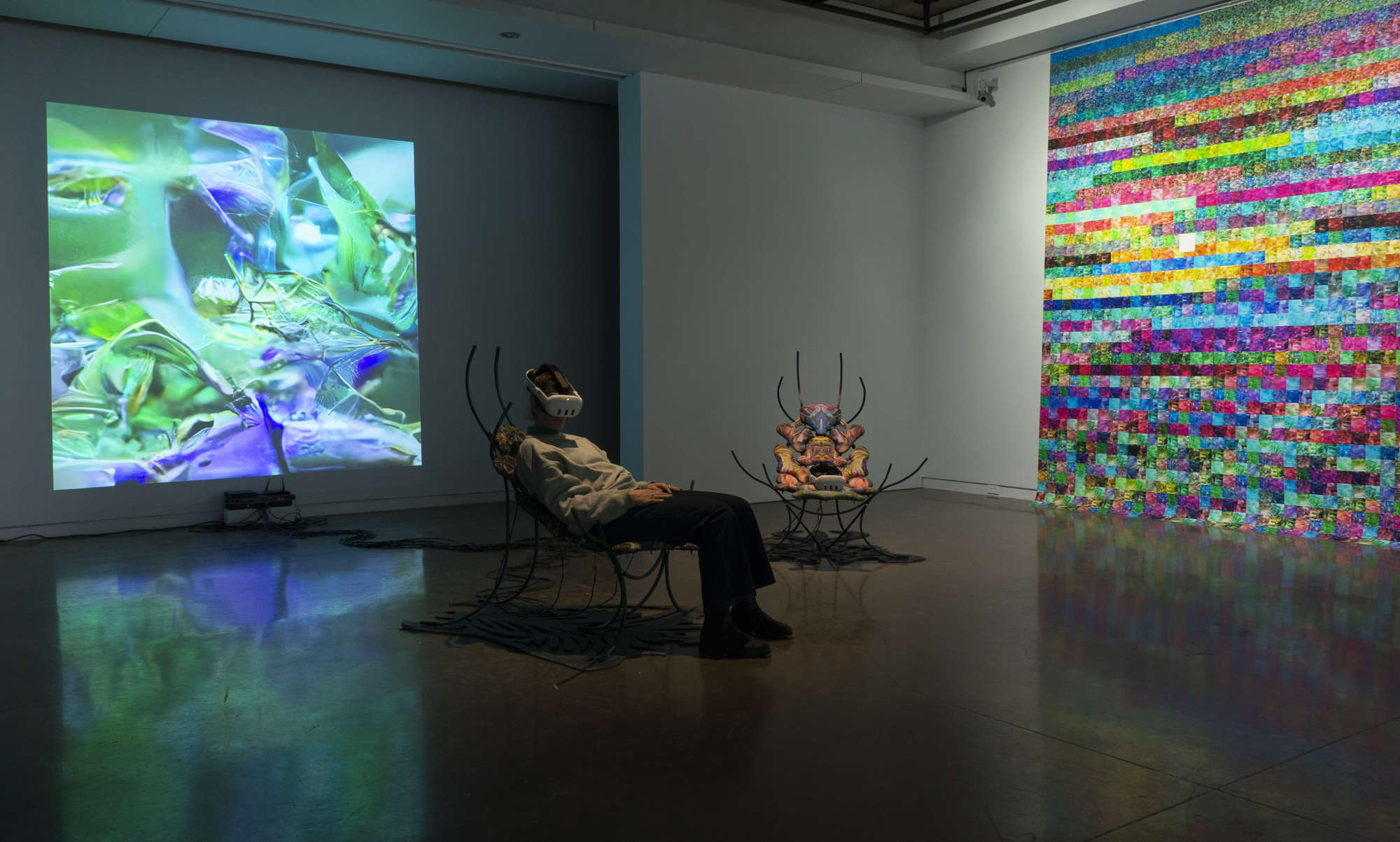
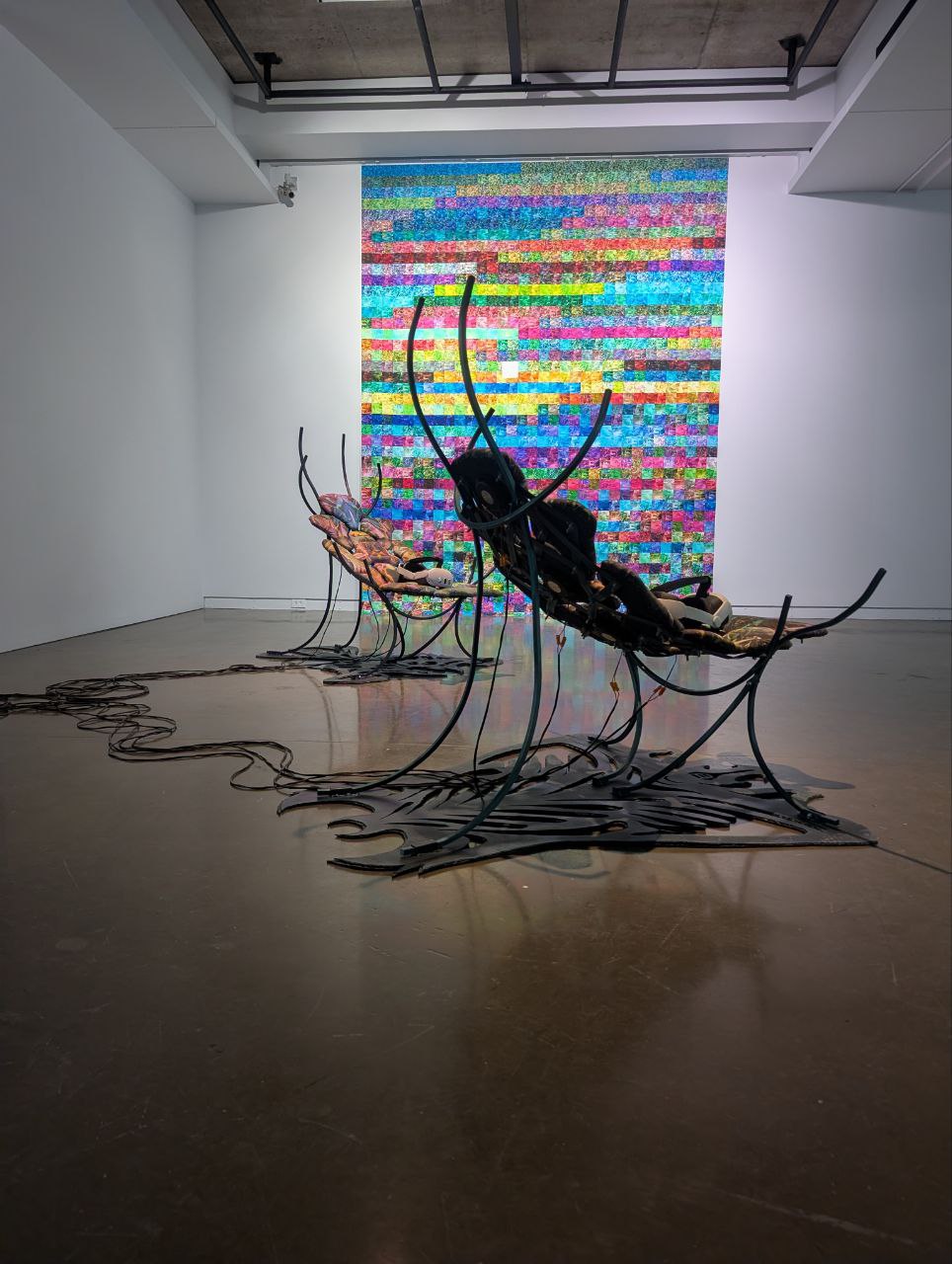
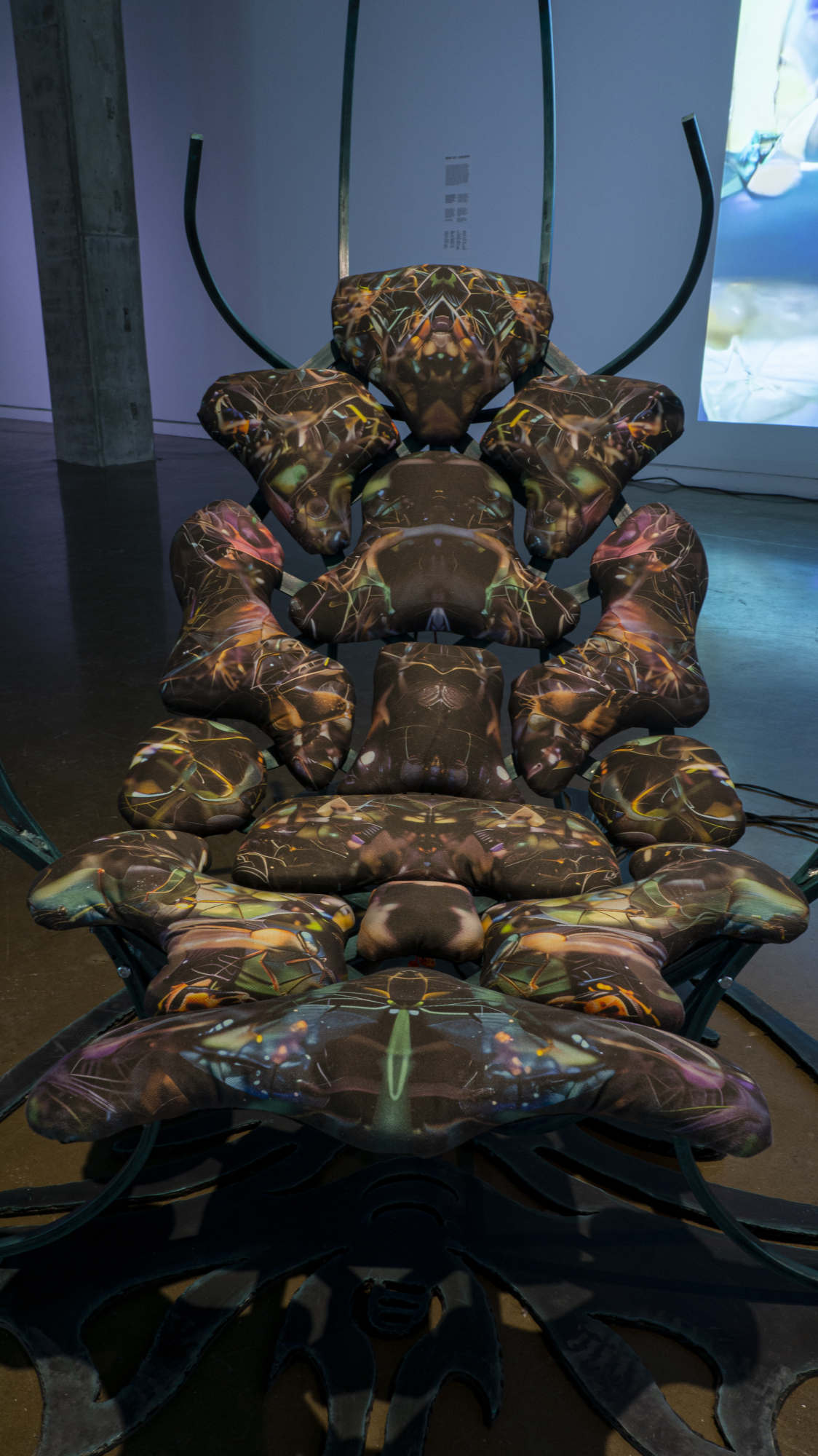
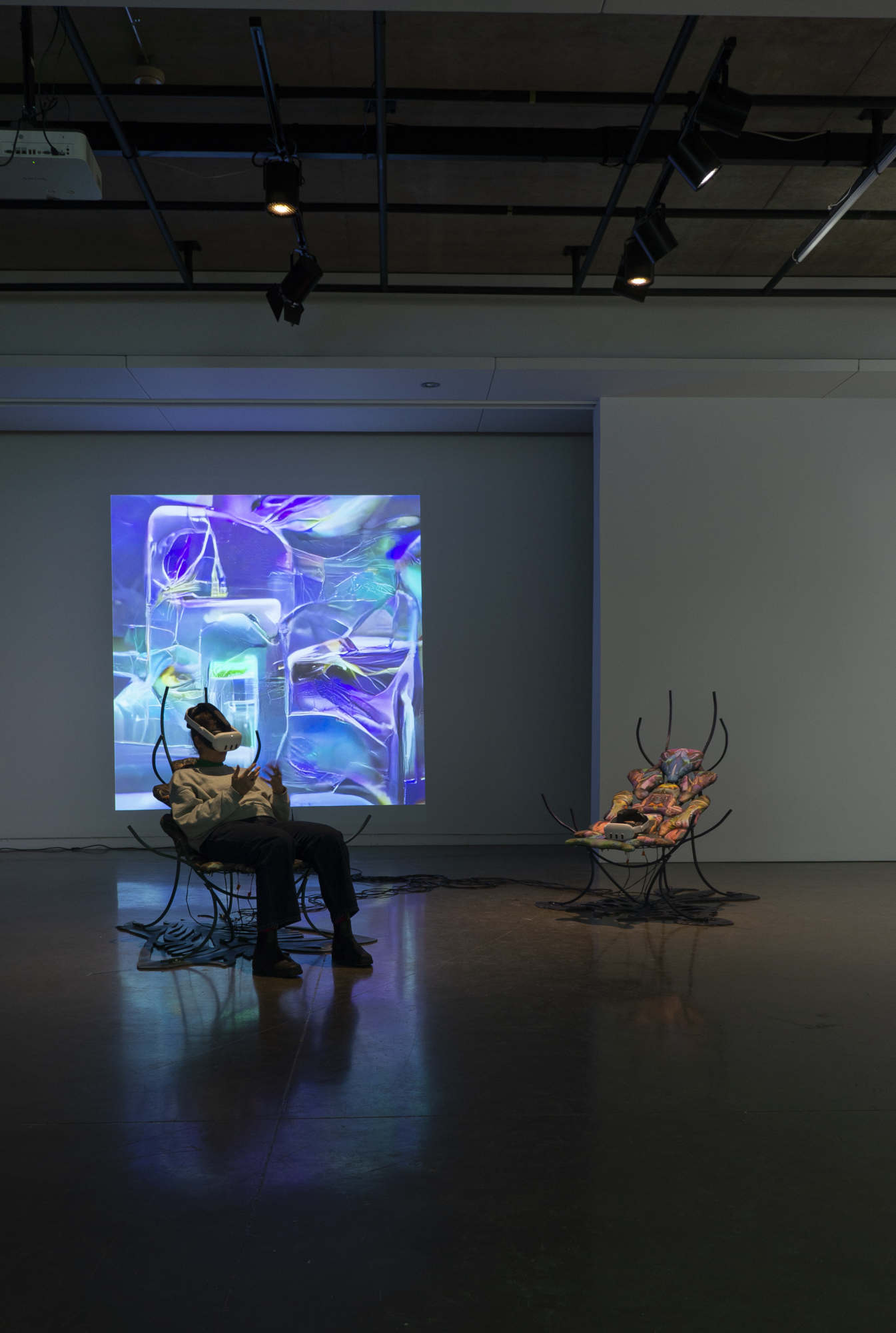
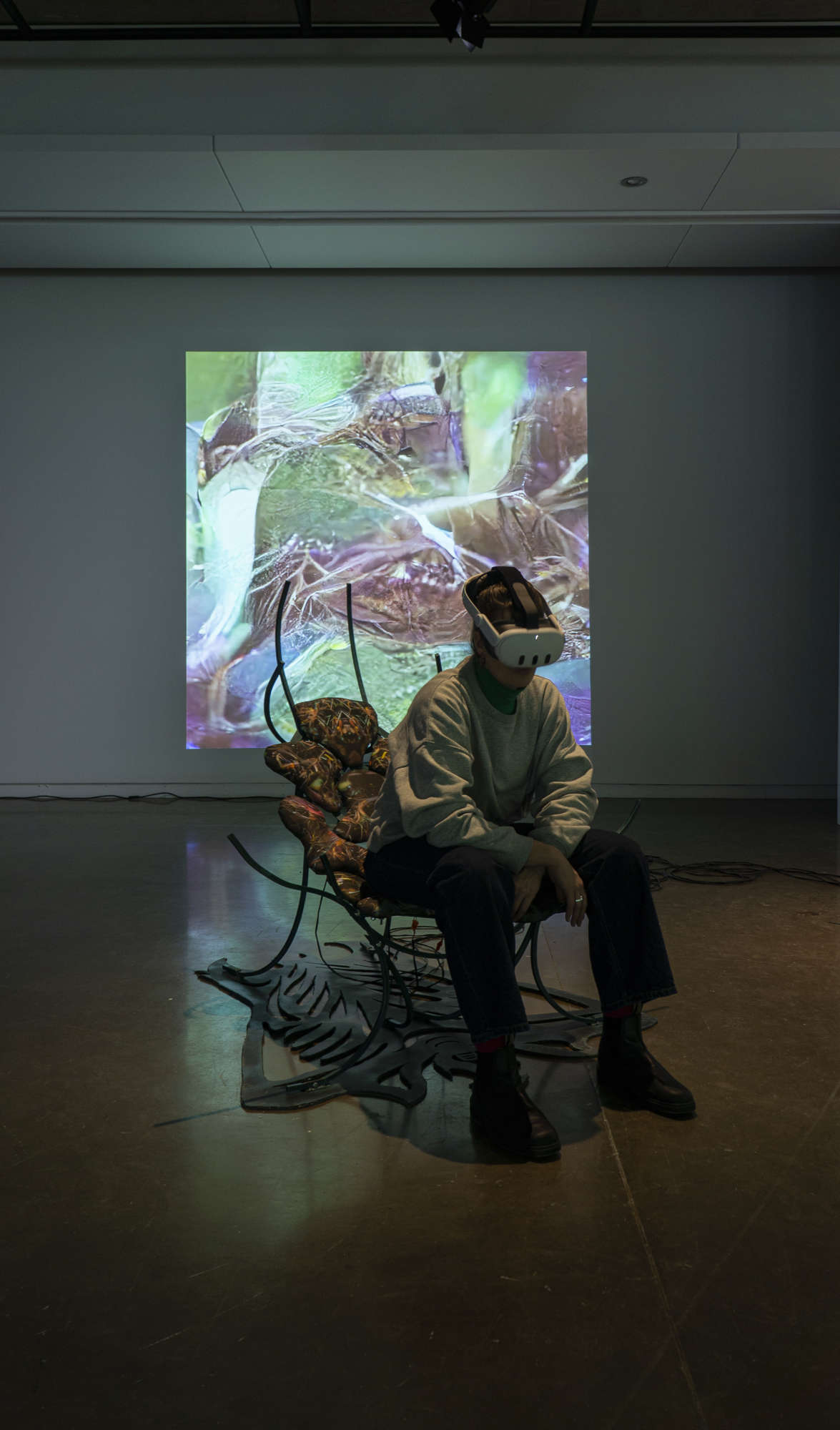
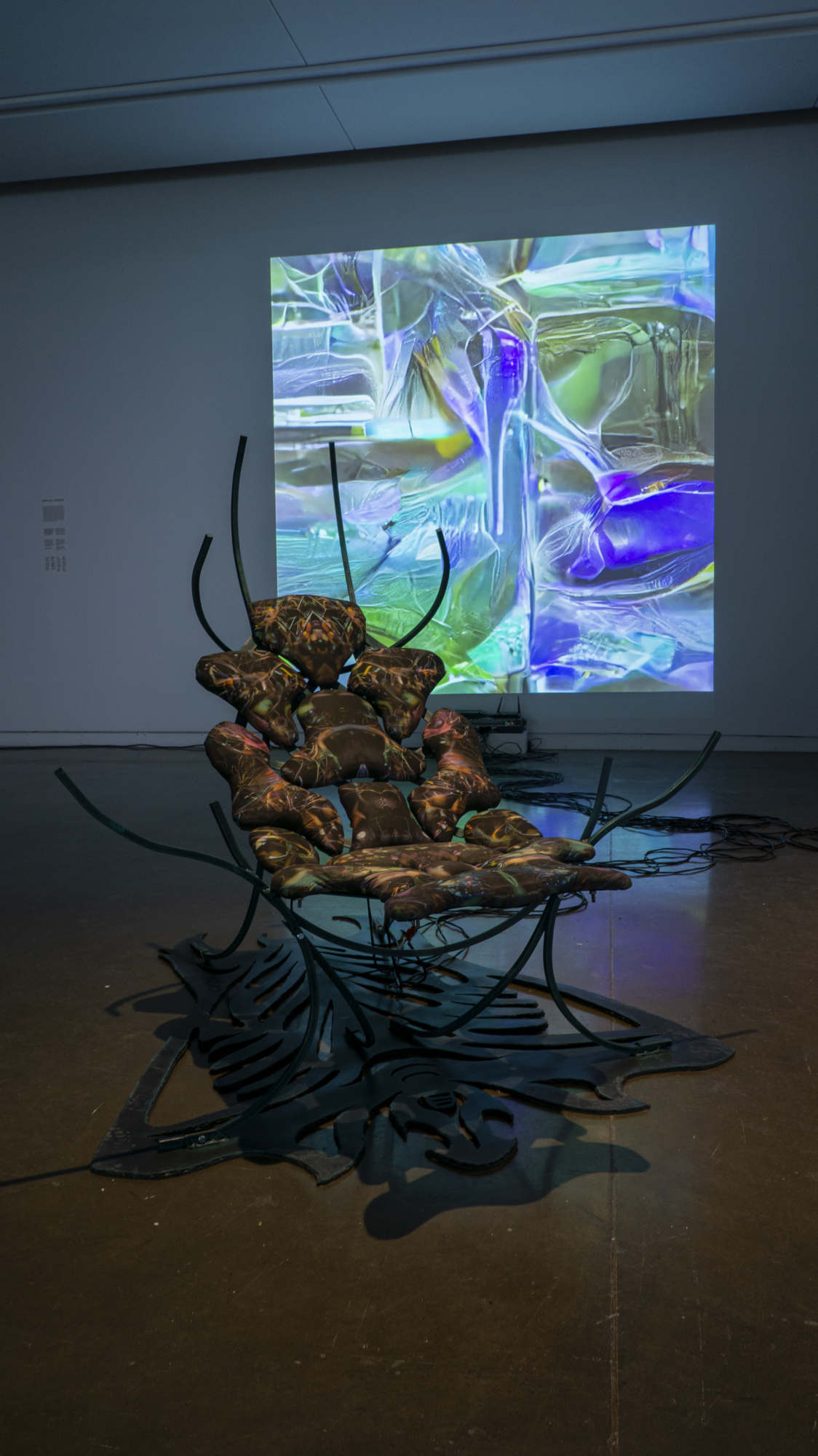
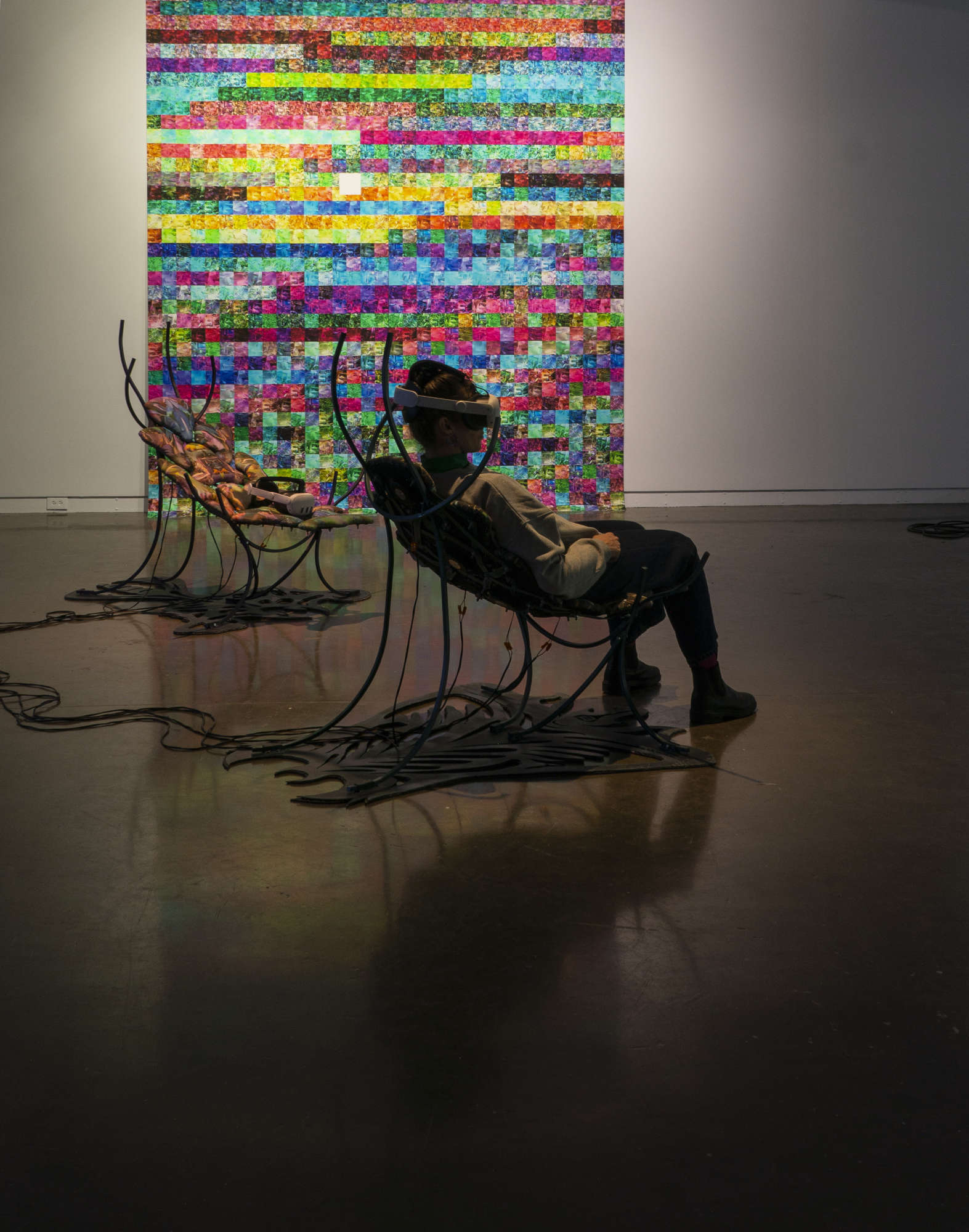
Les outils de l’IA générative produisent à un rythme effréné des milliers d’images, dont la plupart deviennent des déchets numériques, traces d’une énergie excédentaire. C’est à partir de ce constat que Marie-Ève Levasseur a imaginé une spéculation en réalité virtuelle où prend forme le techno-compost. Après avoir expérimenté différents modèles d’IA, l’artiste conçoit ce cycle dans lequel les images-détritus se fragmentent et se dissolvent pour mieux se régénérer en d’autres formes, nourries par la matière numérique désintégrée à l’état de bruit visuel aléatoire, comparable à la neige statique d’un écran télé. Puis, ce lieu invisible où les apprentissages du modèle se condensent avant d’émerger en nouvelles formes, qu’on appelle l’espace latent des modèles d’IA, vient agir véritablement tel un jardin. Dans ce terreau, les images et leurs particules se (re)composent et la prolifération se mue en un rythme plus organique. L’artiste invite ainsi à s’immerger dans cette dynamique symbiotique, esquissant les possibles d’un univers numérique plus lent, attentif et fertile que productif.
Christelle Proulx, curator of the show Devenirs partagés, Pratiques de l'IA, 2025
English translation : Generative AI tools produce thousands of images at a frenetic pace, most of which become digital waste, traces of excess energy. It was from this observation that Marie-Ève Levasseur imagined a speculation in virtual reality where techno-compost takes shape. After experimenting with different AI models, the artist designed this cycle in which image-waste fragments and dissolves, only to regenerate into other forms, nourished by digital matter disintegrated into random visual noise, comparable to static on a TV screen. Then, this invisible place where the model's learning condenses before emerging in new forms, known as the latent space of AI models, truly acts like a garden. In this fertile ground, images and their particles (re)compose themselves and proliferation shifts to a more organic rhythm. The artist thus invites us to immerse ourselves in this symbiotic dynamic, sketching out the possibilities of a digital universe that is slower, more attentive, and fertile rather than productive.
Special thanks to:
Leon Louder for the collaboration, the (de)composition of two soundworlds, and the prior compost and recycling conversation on music, sounds and mulching of digital files...
Sporobole for the Chantier IA residency set up in 2024, that led to my need (and absolute realization) to slow down and process.
The Galerie de l'Université de Montréal, especially Christelle Proulx, Laurent Piché-Vernet, Myriam Barriault and Antoine Congost for the residency with IVADO and the researchers Hugo Bérard, Benoit Baudry and Dominic Thibault for the constructive consultations and collaborations. The other artists Dayna McLeod, Franzisco Gonzales-Rosas and Marion Schneider for the conversations and support during the process.
Pilotenküche residency for having me in Leipzig for 3 months, the CALQ for making the residency in Germany possible and the ZIMMT for the collaboration over there.
Renaud Gervais for the research, the conversations and the emergent algorithmic decomposer agents Compute Shader.
Guillaume Lévesque and Simon Laroche for the communication between sound and the vibrating transducers.
Samuël Hénault Lefebvre for the dedicated development in Unity.
The Atelier La Coulée (especially Jesse and Negar), for their precious counseling during the construction of the structures.
Erin Gee for the open conversation about compost, decay, death and AI.
Cynthia Thibault for letting me photograph her in my installation.
The Canada Council for the Arts for the very necessary financial support.

